Reflections from Facilitating GI-ESCR’s Next Chapter
In mid-2025, FabRiders had the privilege of guiding the Global Initiative for Economic, Social and Cultural Rights (GI-ESCR) through an ambitious, whirlwind strategy process. The project brief was a bit daunting: create a truly participatory, deeply thoughtful organisational strategy in under four months in a context shaped by uncertainty, stretched resources, and a rapidly changing world.
Less than a year later, GI-ESCR has published its 2026–2030 Strategic Plan, a document it explicitly describes as a “living” strategy, with built‑in spaces for learning, adaptation and reflection. Seeing how those ideas show up on the page has been a powerful reminder of what facilitating a participatory, engaging strategic planning process can unlock.
How did the process work in practice, and how did we ensure the final strategy reflected the perspectives and contributions of GI-ESCR’s diverse stakeholders?
Laying a Foundation of Honest Reflection
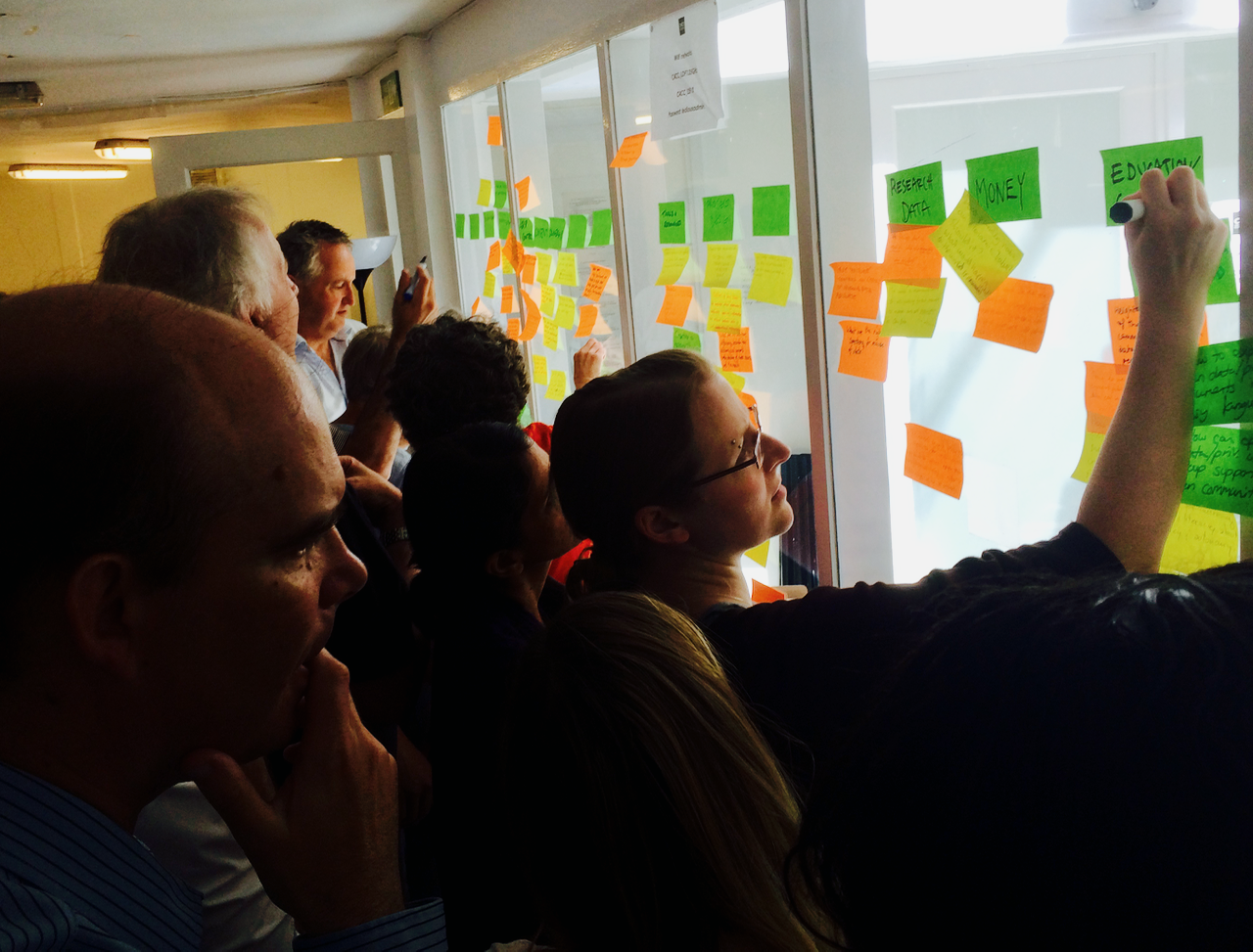
We started, as always, with listening. Dozens of staff and board members, movement allies, funders, and friends of GI-ESCR weighed in through a process that included visioning sessions, questionnaires, and interviews. Our initial background report sought to consolidate all those insights: staff’s aspirations for GI’s future, honest SWOT assessments, and stakeholder interviews that didn’t shy away from hard truths. The reflections were as honest as they were hopeful: internal strengths in narrative and coalition-building; recurring challenges around resources, HR, and focus; dreams of GI-ESCR becoming the “agile convener” for rights-based policy change.
Those early conversations around GI-ESCR as an agile convener and “movement infrastructure” actor now echo clearly in the final strategy, which positions the organisation as a bridge between grassroots movements and multilateral spaces, rather than the face of national struggles.
Our Approach to a First Draft
After conducting one-on-one interviews with 20 stakeholders to gather perspectives on GI’s work and glean lessons from their experiences, it was time to create a draft. Our goal was to synthesise all that complexity into something both practical and visionary: a “first cut” that staff could see themselves in. Rather than present a monolithic plan, we put forward a living structure, centring questions around the “how” and “why”—inspiring principles and systems for adaptation—rather than a prescriptive list of “what” to do next. Scheduled check-ins with the staff allowed for immediate recalibration, and detailed documentation tracked both consensus and divergence.
You can see that emphasis in the published plan’s structure: it leads with context, vision, mission and theory of change, and only then moves into programme pillars, organisational sustainability, and Monitoring, Evaluation and Learning (MEL). This order reflects GI-ESCR’s choice to anchor “what we do” in “how we work” and “why it matters”.
From Draft to Collective Vision

FabRiders’ first draft is deliberately rough: a first step in an iterative process that our clients’ staff and leaders can then challenge, reshape and make their own. GI-ESCR’s Executive Director, Camila Barretto, took that foundation and invested real time by reworking, translating, and challenging the document to reflect the organisation’s unique culture, ambitions, and programmatic DNA. Camila directed further rounds of sessions to listen to staff and board input and surfaced tensions between ambition and capacity. She worked to ensure every section rang true to GI-ESCR’s intersectional, Global South-rooted identity. By the final round, the strategy was no longer a consultant’s artefact; it resonated as GI’s own.
That facilitative leadership is visible in the final 2026–2030 plan: from the explicit centring of Global South perspectives to the decision to integrate communications and narrative change as a core strategic lever rather than a support function.
“We Feel Like Owners”
Staff reflected that this strategy cycle took their inputs beyond consultation, in ways that made them feel like architects of the process. One said, “We feel like owners of the process… everyone collaborated, and that makes me feel included, involved, and engaged.” Even with the challenges of remote work, stakeholders agreed that having space for reflection and disagreement was invaluable.
Similarly, the board and allies gave high marks to both the outcome and how it was achieved: “Thoughtful,” “super well-constructed,” and “clearly grounded in values-driven, Global South-led human rights work” were among the comments we heard. Several noted that a focus on the “how” and a readiness for adaptation set this process apart.
It is telling that the final strategic plan describes itself as a “living document” that staff will keep bringing to life in practice, not just on paper. It builds in bi‑annual learning reviews, staff‑led retreats, and feedback loops to revisit strategy and adapt to context, putting ongoing reflection and course‑correction firmly in staff’s hands, rather than adding another bureaucratic burden.
Lessons: What FabRiders Learned
- Invest early in surfacing organisational history, vision, and tensions. Don’t skip the foundational reflection.
- Draft with humility: expect and encourage ownership. The strategy will only stick if the ED and staff can see their fingerprint on every page.
- Facilitating a living document beats chasing “the perfect plan.” Agile, principles-based frameworks have more value than locked-down prescriptions when the future is unpredictable.
- The first draft is just a stepping stone. True impact happens in implementation, when leadership runs with it, and the conversations grow deeper, sometimes messier, but always more authentic.
Working with GI-ESCR also reinforced a fifth lesson: when an organisation names communications, narrative change, and feminist, intersectional practice as core to its identity, the strategy needs to reflect that not only in values statements but in programme pillars, outcomes and resourcing. The final plan does this by elevating three interconnected pillars (Public Services for Care Societies, Economic Justice and Climate Finance, and Climate and Environmental Justice) and embedding gender justice and intersectionality across them.
This journey exemplified how a participatory and engaging strategic planning process can be transformative. The most satisfying outcome isn’t just that GI-ESCR now has a beautiful 2026–2030 strategy on its website; it’s that the organisation has committed, in that document, to keep learning, reflecting, and adjusting together as the world shifts around them. In times like these, processes that build shared ownership and readiness to adapt are not a luxury; they are the strategy.
Read more and work with us
- Learn about FabRiders’ strategy services.
- Explore more reflections and resources on strategy design
- Apply for the next Strategy Design Cohort for civil society leaders: