More Takeaways from The Strategy Design Festival
Most of us talk about our “theory of change” as if it were a fixed truth. In practice, it’s often a polished narrative on a slide deck, respectable enough to show a funder, but not quite sharp enough to shape what happens on a Tuesday afternoon.
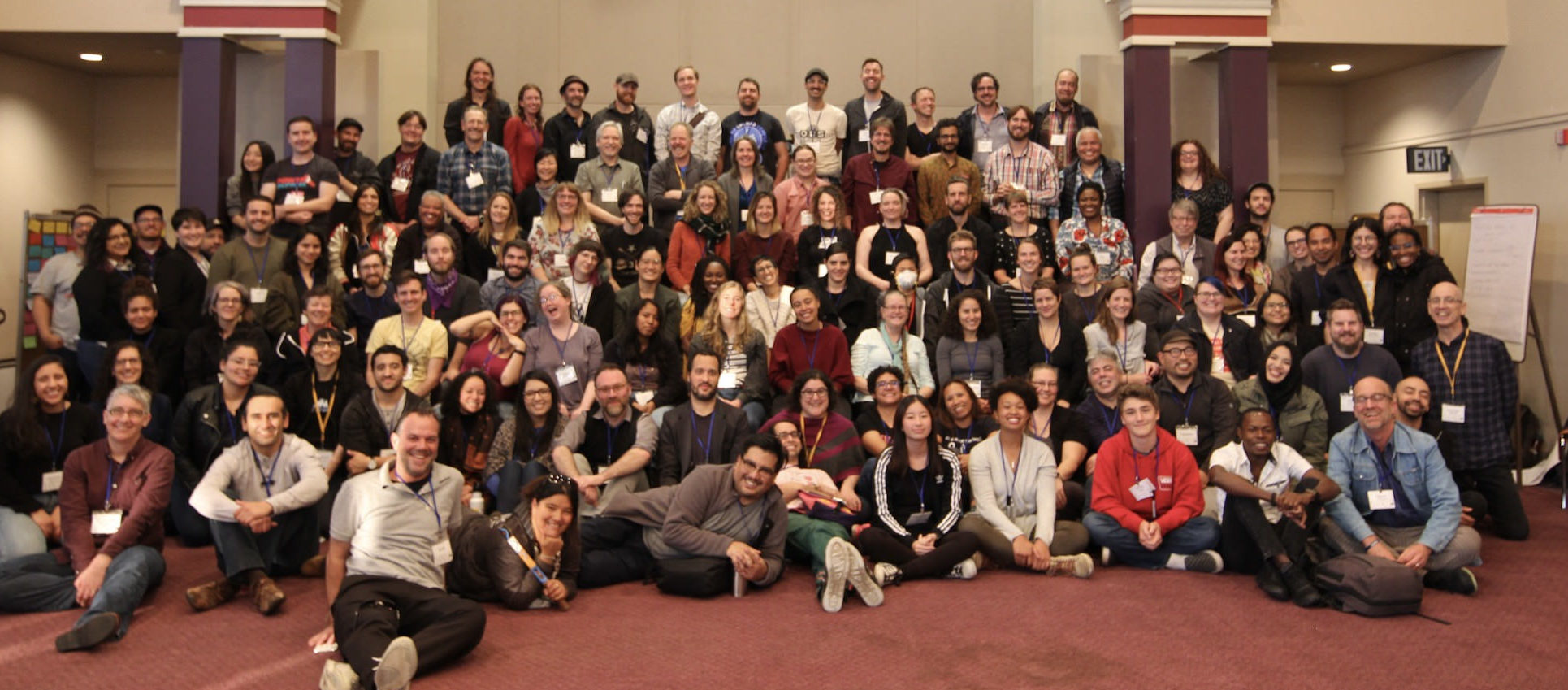
At the Strategy Design Festival, this gap was one of the main frustrations people named: “We have a theory of change, but it doesn’t actually help us make strategic decisions.” In our previous post, we shared some broader takeaways about treating strategy as a verb rather than a document; here, we’re zooming in on what that means for the theory of change sitting underneath your strategy.
If this is a live struggle for you, it’s exactly the kind of work we’ll be doing together in the new Strategy Design Cohort for Civil Society Leaders, turning tidy diagrams into living hypotheses you can actually test.
When your theory of change is too pretty to use
If you work in an NGO, charity or campaign, there’s a good chance you already have a theory of change. It might be a polished diagram from an away‑day, a detailed logframe for a funder, or a mural buried somewhere in an online whiteboard.
And yet, when decisions land in your lap on a Tuesday afternoon, it often doesn’t help very much.
In the Strategy Design Festival, this was one of the most consistent frustrations in the room: “We have a theory of change, but it doesn’t actually shape what we do.” People weren’t asking for a new framework. They were asking how to make the one they already had usable.
This post is about that gap – and what changes when we treat theories of change as living hypotheses, not finished answers.
The problem with “finished” theories of change
A lot of theories of change start from a good impulse: “Let’s be explicit about how we think change happens, and how our work contributes.” Somewhere along the way, they turn into something else.
Common patterns:
- They become compliance artefacts – things we create to satisfy funders, boards or consultants.
- They become over‑engineered – full of boxes, arrows and jargon that nobody can hold in their head.
- They become frozen – snapshots of how we saw the world at a particular moment, even as context shifts around us.
The result is a document that looks rigorous from a distance, but doesn’t actually help people decide what to do next week. Staff can’t use it to say “yes” or “no” to a new opportunity, or to explain why they are making a trade‑off.
A theory of change that never gets argued with quickly stops being a theory. It just becomes a story we tell funders.
What it means to treat it as a “living hypothesis”
A practical takeaway from the Festival is this: it’s more useful to treat a theory of change as a working hypothesis than as a finished statement. Instead of “this is our theory of change”, we can say “this is our best current hypothesis about how change happens – and we might be wrong.”
That small shift opens up different behaviours:
- You expect to test it. You look for signals in your work: where does this seem to hold up, and where does it feel off?
- You give people permission to question it. Staff, partners and communities can say “this bit doesn’t match what we’re seeing on the ground” without feeling disloyal.
- You make change discussable. Updating the theory stops being an admission of failure and becomes a sign of learning.
In science, a hypothesis only has value if you keep checking it against reality. The same is true here. A living theory of change is something you return to regularly: to stress‑test it against new context, to make trade‑offs visible, and to notice where your assumptions no longer fit.
A simple way to make this concrete – borrowed from our Festival partner Aspiration – is to frame your theory of change as one sentence:
“We believe that by doing X in the context of Y we will achieve Z.”
X is the work you do, Y is the specific context you’re operating in, and Z is the change you’re aiming for. If you can’t fill in that sentence in plain language – or if people in your organisation would fill it in very differently – that’s a signal your “theory” needs more shared work.
Three simple tests: Is your theory of change alive?
You don’t need a big redesign to get started. Below are three quick “health checks” you can try with your team.
- The “no‑slides” test
In your next team meeting, ask a couple of people to explain your theory of change without looking at a slide or document. What bits are clear? Where do they hesitate or improvise?
If nobody can explain it simply, you probably don’t have a shared theory – you have a diagram.
- The “decision” test
Take a real decision you’re facing: a possible partnership, a funding opportunity, a campaign tactic you’re debating. Ask: “If we took our theory of change seriously, what would it suggest here?”
If the theory doesn’t help you choose between options, it needs sharpening.
- The “what would we stop?” test
Pick one key assumption in your theory of change and ask, “If this is really how change happens, what would we stop doing?”
If nothing in your current work feels questionable, it might be a sign that your theory is too vague to be useful – or that you haven’t given yourself permission to act on it.
None of these tests requires a new framework. They just invite you to bring your existing theory of change into contact with real life.
Uncertain times are uncomfortable – and invaluable
One upside of working in uncertain times is that they are brutally good at testing our theories of change. When funding landscapes, political conditions, or community needs shift, they expose which assumptions are solid and which were always a bit shaky.
Instead of waiting for stability before we “do strategy”, we can treat volatility as moments that help us see where our theory of change holds up, where it bends, and where it simply breaks. The question becomes less “How do we protect the plan?” and more “What are we learning about how change really happens, given what’s unfolding around us?”
That’s also where strategy comes back into the picture.
Strategy is a time‑bound test of your theory
If a theory of change is your best current guess about how change happens, then strategy is the time‑bound process you use to find out how sound that guess really is.
Over a year or two, your strategy gives you a structured way to:
- Act on your theory of change in a specific context.
- Notice what actually happens – in your organisation, your networks and the wider system.
- Decide which parts of the theory to keep, adapt or abandon.
Seen this way, a “failed” strategy isn’t just a plan that didn’t work. It’s also rich evidence about which assumptions were off. The key is whether you build in the time and habits to notice that evidence, talk about it, and fold it back into your theory of change.
Bringing more voices into the theory
Another pattern that came up at the Festival: who gets to shape the theory of change in the first place. Often, it’s drafted by a small group – senior leaders, a consultant, sometimes a funder – and then rolled out to everyone else.
When that happens, staff and partners recognise the language but don’t feel much ownership. The theory might describe their work, but it doesn’t come from their work.
Treating the theory as a living hypothesis means asking more people to co‑own it:
- Involve staff and partners in naming the key assumptions – not just the activities and outcomes.
- Create low‑stakes ways for people to challenge it, for example, a regular “does this still hold up?” question in team meetings.
- Invite communities you work with to test parts of it: “Does this match how you see change happening here?”
This isn’t about making the diagram more complicated. It’s about expanding the conversation.
From paper to practice (and how we’re working on this now)
If any of this feels familiar, you don’t need to start from scratch. For most organisations, the work is less about developing a brand‑new theory of change and more about bringing the existing one back to the centre of strategic decisions. One useful way to think about it is this: strategy is a time‑bound process for finding out how sound your theory of change actually is.
That’s exactly what we’ll be working on in the new Strategy Design: a cohort for civil society leaders – a 6‑session online programme for NGOs, charities and civil society organisations.
In the cohort, we’ll:
- Translate your theory of change into clear decision tests you can use in day‑to‑day work.
- Identify which assumptions most need testing in the next 6–12 months.
- Design light‑touch rhythms (like “strategy huddles”) to keep your strategy alive between meetings.
You can read more and apply here:
https://www.fabriders.net/strategy-design-a-cohort-for-civil-society-leaders/
In the next post in this series, I’ll turn to the other thread that kept surfacing at the Festival: why strategy is always about power, and how a simple power analysis can change how you design your next strategy process. If you’d like to get that post – and hear future updates on cohorts and learning spaces – you can subscribe to the FabUpdate newsletter for occasional emails on strategy design and facilitation.