Ready to get caught up with all things FabRiders?
Upcoming Events
Next week: Facilitating Collective Power in the Age of AI

On 20 and 21 October, we’re prototyping a new online lab on AI. We’ll examine it both as a threat to navigate and as a strategic opportunity for collective action. We’ll explore how facilitators, organisers and activists can use AI to build collective power, and how we can push back against the concentration of that power in a few companies. Do you want to join or know someone who would be a great participant? Here are the details – https://www.fabriders.net/facilitating-collective-power-in-the-age-of-ai/
Save the date: The Strategy Design Festival
The second Strategy Design Festival will take place in London on Tuesday 19 January 2027. The festival is a one-day gathering for people in NGOs, civil society organisations and charities who want strategies that can adapt as circumstances change. In a year of so much uncertainty, we’ll explore practical ways to make strategy a living, participatory practice. We’ve begun planning with our friends at Aspiration, and several people who attended last year, such as Laura Jump, are already helping to shape the day. We’re grateful. More details are coming soon. For now, please put the date in your diary.
What we’re working on
Mnemonic’s Strategy
Over the past few months, FabRiders has been guiding Mnemonic through a participatory strategic planning process. We’ve worked with the team on SWOT, reflection and planning sessions and conducted 18 stakeholder interviews to gain a diversity of wisdom and shared ownership of the strategy. One example of how inputs have had impact is the way the vision statement has evolved. Early drafts focused on ensuring that harms suffered in conflict and repression are documented, remembered and used to pursue justice on communities’ own terms. Through rounds of review and revision, it has become sharper and more honest about what “community” and “co-governance” really mean. It now describes accountable relationships with survivors, families and documenters. The stakeholder interviews also strongly confirmed Mnemonic’s value as essential infrastructure for keeping fragile digital evidence safe and usable. They also highlighted the next challenge: turning that preserved material into lasting use for accountability, public truth-telling and building the capacity of local partners.
The NGO-ISAC Conference
We’re supporting Kristin Antin and the NGO-ISAC team as they prepare for their annual conference in Washington, DC, on 17 November. The conference brings together the non-profit cybersecurity community on building operational resilience. It combines peer learning with hands-on sessions on personal protection, incident response and organisational security. We’re working directly with workshop facilitators and speakers to strengthen the design and delivery of their sessions, ensuring they are practical and participant-centric.
The Strategy Design Cohort

Our second Strategy Design Cohort is now halfway through. Six of us meet online every Thursday, joining from West Yorkshire, Brighton, North Wales, Los Angeles and San Francisco. Each week, we work through how to design strategy in very uncertain times. That means focusing less on the what, because that can change overnight, and more on how we work and why. So far, we’ve covered facilitative leadership, strategy in uncertain times, and power and privilege. If you work in civil society and this sounds useful, let me know and I’ll make sure you hear about the next cohort first.
Session Design Lab
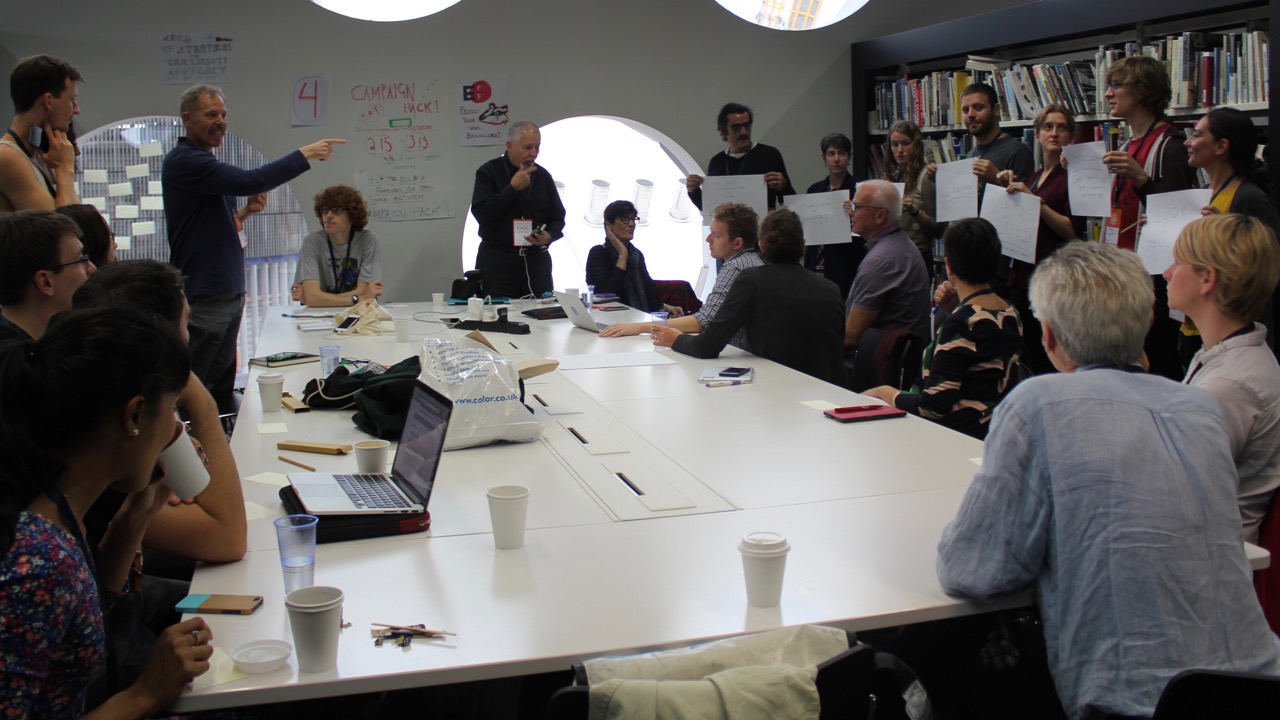
In September, our Session Design Lab brought together facilitators, coaches and practitioners from the human rights, humanitarian, digital security and open-source communities. Many had learned facilitation on the job and wanted to listen more effectively, include quieter voices and run sessions that people remember. Over two days, each participant designed a session they plan to run and received thoughtful feedback from peers. They left with a better grasp of how adults learn, practical tools for engaging diverse groups, and a supportive network of facilitators working for social change. The next lab will run in the first quarter of 2027.
Building online communities we can keep

In a new piece for Internet Exchange, we wrote about what we learned during a Rise Against Big Tech (RABT) workshop on digital spaces. Choosing a platform is only part of building an online community that lasts. Technology can support relationships, but it can’t create purpose, trust or participation. Forums and mailing lists keep knowledge organised. Real-time chat is good for quick coordination, but decisions and context can be lost. Moving off corporate platforms takes time, onboarding, support and a shared reason to do so. The piece suggests treating a move as a shared project. Involve members, keep accessibility, privacy and moderation in view, and fund the ongoing care that keeps a space going.
Want to put this into practice? Join the RABT community forum and help shape a space we own and run together. You can share your experiences, ask questions and help build a world that isn’t shaped by tech interests. You’ll find the sign-up button in the top right corner.
What we’re listening to
How Did We Get Here? No World Order (BBC Radio 4 / BBC Sounds)
When the Cold War ended, many believed a new world order had arrived, built on American power, liberal democracy and free markets. By 2026, that seems far less certain. In this six-part series, Tristan Redman and guests ask whether the “rules-based order” is ending, what might replace it, and whether it ever really existed. It’s a clear guide to how the world’s civil society became so fractured. Listen on BBC Sounds
What we’re reading
End Times Fascism: And the Fight for the Living World, by Naomi Klein and Astra Taylor
While the podcast above explains how the old order came apart, this book examines who profits from the chaos. Klein and Taylor argue that three groups are converging into what they call “end times fascism”: religious extremists, tech oligarchs and ethnonationalists. The second half of the book is what caught our attention. It’s about building resistance by focusing on hope, connection and localism, and its ideas will be familiar to anyone working in civil society.
Work with FabRiders
Is your organisation facing a big decision, a strategy refresh or a gathering that needs to go well? FabRiders helps NGOs, civil society organisations and charities design participatory strategies that can adapt as things change. We also design and facilitate workshops and convenings, and help teams build their own facilitation skills. We work with leadership and staff to make sure the right people are in the room, decisions are clear, and plans hold up when the ground shifts. If you’d like to explore working together, contact us.